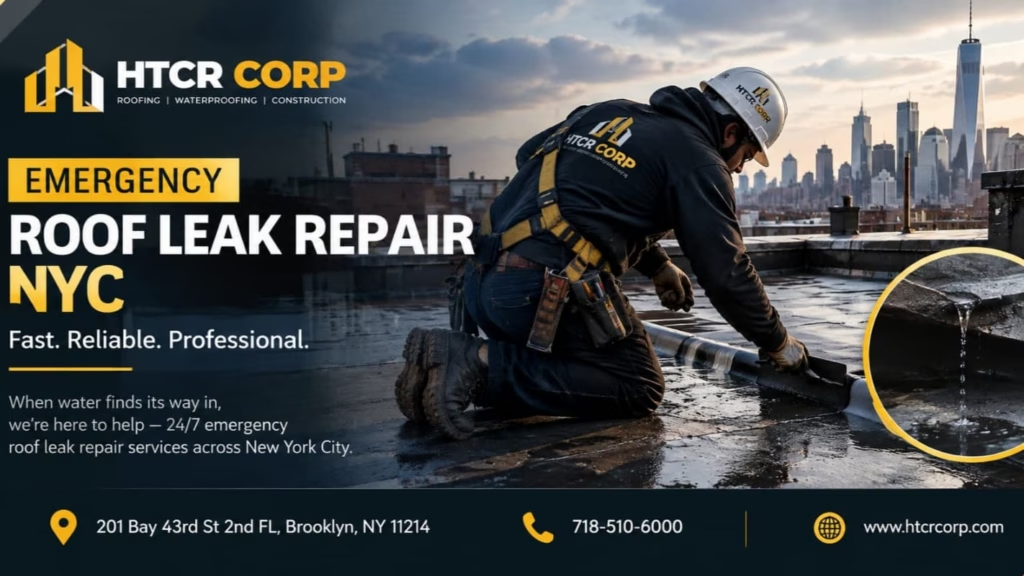
A roof leak can quickly turn into a serious problem. Water may spread through the ceiling, walls, insulation, and other parts of your home before you even know where the leak started. During heavy rain, snow, strong winds, or a sudden storm, even a small roof opening can allow significant amounts of water inside.
If you are dealing with an active roof leak, emergency roof leak repair in NYC can help limit further damage and protect your property. The first priority is to control the immediate water problem and then have the roof professionally inspected to identify and repair the source.
What Should You Do When Your Roof Starts Leaking?
When water begins entering your home, don’t wait for the weather to improve before taking basic precautions. A leak can continue damaging materials even after the visible dripping stops.
Start by protecting the interior of your property.
- Place buckets or containers beneath active drips.
- Move furniture, electronics, and other valuables away from the affected area.
- Use towels or plastic sheeting to help protect floors and belongings.
- If water is near electrical fixtures, avoid touching the area and contact a qualified professional.
- Take photos of the visible damage for your records and insurance documentation.
The most important step is to avoid creating additional damage while trying to find the leak yourself. Water can travel along roof decking, insulation, rafters, and ceiling materials, so the location where water appears inside may not be directly below the actual roof problem.
Why Is Emergency Roof Leak Repair Important?
A roof leak rarely fixes itself. Even when dripping stops, moisture may remain inside the roofing system or building materials.
Continued moisture can contribute to:
- Damaged ceilings and drywall
- Wet insulation
- Wood deterioration
- Mold and mildew growth
- Interior staining
- Electrical hazards
- Damage to flooring and personal belongings
A small roofing problem can therefore become a much larger repair if it is ignored.
Emergency roof repair focuses on stopping or reducing active water intrusion first. Once the immediate problem is controlled, the roofing contractor can determine the underlying cause and recommend the appropriate permanent repair.
Common Causes of Roof Leaks in NYC
New York City roofs experience changing weather conditions throughout the year. Heavy rain, snow, ice, wind, temperature changes, and aging roofing materials can all contribute to roof problems.
Some common causes include:
1. Damaged or Missing Shingles
Shingles can crack, curl, loosen, or blow away during severe weather. Once the protective roofing layer is compromised, rainwater can enter the underlying roof system.
2. Flashing Damage
Roof flashing is installed around areas such as chimneys, vents, walls, and other roof penetrations. Damaged, loose, or improperly sealed flashing can become a common source of water intrusion.
3. Clogged or Damaged Drainage Systems
Flat and low-slope roofs depend on proper drainage. When drains, scuppers, or other drainage paths become blocked, water may remain on the roof and eventually find its way through vulnerable areas.
4. Storm Damage
Strong winds, heavy rain, falling branches, and other severe weather can damage roofing materials within a short period of time.
After a major storm, a roof may have damage that isn’t immediately visible from inside the building. A professional inspection can help identify vulnerable areas before they develop into larger leaks.
5. Aging Roofing Materials
Older roofing systems are generally more vulnerable to leaks because materials can become brittle, worn, cracked, or deteriorated over time.
Regular inspections and maintenance can help identify problems before they become emergencies.
Temporary vs. Permanent Roof Leak Repair
When a roof is actively leaking, the first solution may not always be the final repair.
Temporary Emergency Repair
A temporary repair is intended to control water intrusion and protect the property until a permanent repair can be completed.
Depending on the situation, this may involve securing damaged roofing materials, covering an exposed area, sealing a vulnerable location, or taking other measures to reduce water entry.
Permanent Roof Repair
A permanent repair addresses the underlying roofing problem rather than simply covering the visible leak.
The appropriate solution depends on the type and extent of damage. It could involve repairing or replacing damaged roofing materials, correcting flashing problems, improving drainage, or repairing another compromised section of the roofing system.
The goal of emergency service should be more than simply stopping today’s drip. The underlying cause should also be identified so the problem does not continue.
When Should You Call an Emergency Roofer?
Not every roofing issue requires emergency service. However, you should seek professional assistance quickly when water is actively entering your property or when the roof has suffered significant damage.
Consider emergency roof repair when you notice:
- Water entering through the ceiling
- A rapidly spreading ceiling stain
- Active dripping during rainfall
- A large section of missing or damaged roofing
- Storm or wind damage
- A damaged roof opening
- Water accumulating around a roof penetration
- Significant damage to a flat roof
- Signs that water is reaching electrical fixtures
The longer active water intrusion continues, the greater the potential for interior and structural damage.
Emergency Roof Leak Repair for NYC Properties
Roof emergencies can happen to both residential and commercial properties. The appropriate repair depends on the roofing system, the location of the damage, the severity of the leak, and the weather conditions.
A professional roofing contractor should inspect the affected area, determine the likely source of water intrusion, and explain whether the situation requires a temporary emergency measure, a permanent repair, or more extensive roofing work.
For NYC property owners, responding quickly can make the difference between a manageable roofing repair and a much more expensive water-damage problem.
How Does Emergency Roof Leak Repair Work?
Emergency roof leak repair is usually handled in stages. The first objective is to reduce or stop active water intrusion. After that, the roofing professional can investigate the source of the problem and determine what permanent work is needed.
A typical emergency repair process may include the following steps.
1. Initial Roof Assessment
The roofer first evaluates the visible signs of damage and determines where water may be entering the building. This can include checking shingles, membranes, flashing, roof penetrations, seams, drainage areas, and other vulnerable points.
Because water can travel beneath roofing materials, the visible interior stain is not always directly below the exterior leak.
2. Locating the Source
Finding the actual source is one of the most important parts of the repair.
A professional may inspect:
- Damaged or missing roofing materials
- Flashing around chimneys and walls
- Pipe and vent penetrations
- Roof seams
- Drainage systems
- Areas where roofing materials have separated
- Signs of standing water
- Storm-damaged sections
The inspection helps determine whether the problem is isolated or part of a larger roofing issue.
3. Controlling the Immediate Leak
If water is actively entering the property, emergency measures may be necessary before permanent repairs can be completed.
The specific method depends on the roofing material and the location of the damage. The purpose is to reduce further water intrusion while keeping the property protected.
4. Permanent Repair
Once the source has been identified, the roofer can recommend a permanent solution.
Depending on the condition of the roof, this could include repairing damaged materials, replacing a damaged section, correcting flashing, addressing drainage problems, or completing more extensive roofing work.
Storm Damage and Emergency Roof Repair
Severe weather is one of the most common reasons property owners suddenly need emergency roof repair.
High winds can loosen or remove roofing materials. Heavy rain can expose weaknesses around flashing and roof penetrations, while fallen branches can puncture or damage the roofing system.
After a storm, don’t assume that a roof is fine simply because there is no visible leak inside the property. Some damage may remain hidden until the next rainfall.
Signs of Possible Storm Damage
Look for:
- Missing or displaced shingles
- Cracked or broken roofing materials
- Punctures or holes
- Damaged flashing
- Loose roof components
- Fallen branches or debris
- Damaged vents or other roof penetrations
- New water stains on ceilings or walls
If you see significant damage, professional inspection is recommended before attempting repairs yourself.
Emergency Repair for Flat Roofs
Flat and low-slope roofs require particular attention when a leak develops. Unlike steep-slope roofs, they are designed with drainage systems that help move water away from the surface.
When drains or drainage paths become blocked, water can remain on the roof for extended periods. This additional exposure can increase stress on seams, membranes, flashing, and other vulnerable areas.
A flat roof leak may be related to:
- Damaged roofing membrane
- Open or deteriorated seams
- Failed flashing
- Roof penetrations
- Standing water
- Blocked drains
- Aging roofing materials
The correct repair depends on the roofing system and the exact source of the water intrusion.
How Much Does Emergency Roof Leak Repair Cost in NYC?
The cost of emergency roof leak repair can vary considerably. There is no single price that applies to every roof because the extent and location of damage are different from one property to another.
Several factors can affect the final cost.
Extent of the Damage
A small damaged section may require considerably less work than widespread roof deterioration or storm damage.
Roofing Material
Different roofing systems require different materials, techniques, and labor. Shingle roofs, flat roofs, modified bitumen, single-ply membranes, and other systems can have different repair requirements.
Roof Accessibility
A difficult-to-access roof may require additional equipment, preparation, or labor.
Emergency Timing
Repairs requested during nights, weekends, holidays, or severe weather conditions may have different service costs than routine scheduled work.
Water Damage
If water has already reached ceilings, insulation, drywall, framing, or other building materials, the overall project may become larger than the roofing repair itself.
For this reason, getting the roof inspected early can help prevent a small roofing problem from becoming a much more expensive property repair.
Emergency Roof Repair vs. Roof Replacement
A roof leak does not automatically mean that the entire roof needs to be replaced.
If the roofing system is generally in good condition and the damage is limited to a specific area, repair may be a practical solution.
Replacement may become more appropriate when the roof has widespread deterioration, repeated failures, extensive storm damage, or has reached the end of its expected service life.
A professional inspection should consider the overall condition of the roofing system rather than focusing only on the location of one leak.
Repair May Be Appropriate When:
- Damage is limited to a small area
- Most roofing materials remain in good condition
- The roof is relatively young
- The underlying structure is sound
- The leak has an identifiable and repairable source
Replacement May Be Considered When:
- Damage is widespread
- Leaks keep returning after repairs
- Roofing materials are severely deteriorated
- The roof has reached the end of its useful service life
- There are significant underlying problems
Choosing between repair and replacement should be based on the roof’s condition, not simply the presence of one leak.
Why Roof Leaks Can Become More Serious Over Time
A roof leak may begin as a small opening, but water can travel farther than expected once it enters the roofing system or building.
For example, moisture can move along roof decking or framing before becoming visible on a ceiling. This means that a small interior stain may represent a larger hidden moisture problem.
Ignoring the issue can increase the risk of:
- Damaged insulation
- Deteriorated wood
- Mold or mildew
- Peeling interior finishes
- Damaged ceilings and walls
- Higher repair costs
Prompt attention can help limit the amount of damage caused by continued water intrusion.
What Should You Avoid During a Roof Leak?
Trying to solve a roofing emergency without the proper equipment or experience can create additional problems.
Avoid climbing onto a wet roof, especially during storms or high winds. Roofing surfaces can become extremely slippery, and unstable materials may create fall hazards.
You should also avoid covering up interior stains without addressing the source of the water. Painting over a water mark, for example, does not stop the leak.
Instead, focus on protecting the interior of the property and arrange for the roof to be professionally assessed.
How to Reduce the Risk of Future Roof Leaks
Emergency repairs are important, but prevention can help reduce the likelihood of another roofing emergency.
Regular roof maintenance can include:
- Inspecting the roof after severe weather
- Keeping drainage areas clear
- Checking flashing and roof penetrations
- Looking for damaged or missing roofing materials
- Addressing small defects before they become major leaks
- Scheduling professional roof inspections when needed
A proactive maintenance routine can help identify problems while they are still manageable.
Professional Help for Emergency Roof Leaks in NYC
When a roof begins leaking unexpectedly, acting quickly can help protect your property from additional water damage.
The right repair depends on the roofing system, the cause of the leak, the extent of the damage, and the overall condition of the roof. A professional inspection can help determine whether you need an emergency repair, a more extensive permanent repair, or eventually a complete roof replacement.
For NYC homeowners and property owners, the goal should be simple: control the leak, identify the cause, repair the problem properly, and protect the roof from future damage.
What to Do After an Emergency Roof Repair
Once the immediate leak has been controlled, the job isn’t necessarily finished. A temporary repair can protect your property while a permanent solution is being planned, but the affected area should still be evaluated.
Ask the roofing professional what caused the leak, what was repaired, and whether any additional damage was discovered during the inspection.
If moisture entered the building, the interior areas should also be checked for signs of water damage.
Emergency Roof Leak Repair Checklist
When dealing with a leaking roof, having a simple checklist can help you respond quickly without making the situation worse.
Immediately
- Move valuables away from the affected area.
- Place containers beneath active drips.
- Protect floors and furniture from water.
- Keep people away from unsafe areas.
- Avoid walking on a wet or damaged roof.
- Contact a professional roofing contractor if the leak is significant.
After the Leak Is Controlled
- Have the roof inspected.
- Identify the actual source of the leak.
- Check whether the roofing materials are damaged.
- Look for signs of moisture inside the building.
- Determine whether a temporary or permanent repair is required.
- Keep records and photographs of the damage.
Taking these steps can help reduce additional damage while the roofing problem is being addressed.
Can a Roof Leak Be Repaired From the Inside?
In some situations, you may be able to temporarily control water entering from inside the property, but this does not normally repair the actual roofing problem.
The source of a roof leak is usually located on the exterior roofing system. Water can travel through roofing layers before appearing inside, making interior repairs alone unreliable as a permanent solution.
For example, sealing the area around an interior ceiling stain may hide the visible symptom while water continues entering through the roof.
A proper roof inspection is therefore important for identifying and addressing the actual source.
Should You Repair a Roof Leak Yourself?
Minor maintenance tasks may sometimes be suitable for a property owner, but an active roof leak can involve significant safety risks.
Wet roofing surfaces, damaged decking, steep slopes, strong winds, and unstable materials can make climbing onto a roof dangerous.
DIY repairs can also make the situation worse if the wrong materials or repair methods are used.
For an active or difficult-to-locate leak, professional roof inspection and repair is generally the safer approach.
Does Homeowners Insurance Cover Roof Leaks?
Insurance coverage for roof leaks depends on the policy and the cause of the damage.
Sudden damage caused by certain covered events, such as a severe storm, may be treated differently from leaks caused by long-term deterioration, poor maintenance, or normal aging.
If your roof has suffered storm damage, document the condition of the property and contact your insurance provider to understand your coverage and claim requirements.
A roofing inspection can also help document visible roof damage, but insurance decisions ultimately depend on your specific policy and insurer.
How Quickly Should a Roof Leak Be Repaired?
An active roof leak should be addressed as soon as reasonably possible.
Even if the amount of water seems small, continued moisture can damage ceilings, insulation, walls, wood, and other building materials.
A leak that appears only during heavy rainfall should not necessarily be ignored. Intermittent leaks can still indicate a damaged roofing system that may become worse during the next storm.
The sooner the source is identified, the better the opportunity to limit additional damage.
How Can You Tell If a Roof Leak Is Getting Worse?
A worsening roof leak may produce more noticeable signs inside the property.
Watch for:
- Increasing ceiling stains
- More frequent dripping
- Water appearing in new areas
- Sagging ceilings
- Peeling or bubbling interior finishes
- Damp insulation
- Musty odors
- New leaks after rainfall
- Visible changes to the exterior roof
If water is spreading or entering around electrical fixtures, treat the situation as urgent and avoid touching potentially wet electrical components.
When Is a Roof Leak an Emergency?
A roof leak is more likely to require emergency attention when water is actively entering the building or when significant roofing damage has occurred.
Examples include a large roof opening, major storm damage, extensive missing roofing materials, rapidly spreading interior water damage, or substantial water accumulation on a flat roof.
A small isolated defect may not always require emergency service, but delaying an active leak can allow the damage to grow.
Frequently Asked Questions About Emergency Roof Leak Repair NYC
How much does emergency roof leak repair cost in NYC?
There is no universal emergency roof repair price. Costs depend on the roof type, location of the damage, accessibility, materials required, extent of the repair, and whether additional water damage is present.
The best way to understand the expected cost is to have the roof inspected and receive a repair recommendation based on the actual condition.
Can a small roof leak cause major damage?
Yes. Even a small opening can allow water to enter the roofing system and travel to other areas of the property.
If the leak continues, it may contribute to damaged ceilings, insulation, wood, drywall, and interior finishes.
Is emergency roof repair the same as roof replacement?
No. Emergency roof repair is intended to address an immediate roofing problem and prevent further water intrusion.
A roof replacement involves removing and replacing a substantial portion or the entire roofing system. A leak does not automatically mean that a complete replacement is necessary.
How do I know whether I need roof repair or replacement?
The decision depends on the age, condition, extent of damage, and history of the roofing system.
A roof with isolated damage may be repairable, while widespread deterioration or repeated failures may make replacement a better long-term option.
What causes roof leaks after heavy rain?
Heavy rain can expose damaged shingles, failed flashing, open seams, blocked drainage systems, deteriorated roofing materials, and other weak points.
Water can also enter through roof penetrations or areas where roofing materials have separated.
Can a roof leak happen without visible ceiling damage?
Yes. Water may remain within roofing or building materials before becoming visible inside the property.
This is one reason a professional inspection can be useful even when the interior damage appears minor.
How can I prevent emergency roof leaks?
Regular maintenance and timely repairs can reduce the risk of unexpected leaks.
Keep drainage systems clear, inspect the roof after severe weather, monitor flashing and roof penetrations, and address damaged roofing materials before they become larger problems.
Protect Your Property With Prompt Roof Repair
A roof leak should never be treated as just a cosmetic problem. Water entering through the roofing system can affect both the exterior roof and the interior of the property.
Whether the problem is caused by storm damage, deteriorated roofing materials, damaged flashing, drainage issues, or another roofing defect, identifying the source is the first step toward an effective solution.
If you are dealing with an active roof leak, emergency roof leak repair in NYC can help reduce further water intrusion and protect your property. The right solution may be a temporary emergency measure, a permanent repair, or, when the roof is severely deteriorated, a complete replacement.
HTCR Corp can help property owners evaluate roofing problems and determine the appropriate next step based on the condition of the roof.
Don’t wait for a small leak to become a major water-damage problem. Have the roof inspected and address the source as soon as possible.
Contact US
Website: www.htcrcorp.com/
Phone: 718-510-6000
Serving: Manhattan, Brooklyn, Queens, Bronx, Staten Island, New Jersey, and Long Island
Address: 201 Bay 43rd St 2nd FL Brooklyn, NY 11214