
Installing roof shingles the right way is one of the most important steps in protecting a home or commercial building. A properly installed shingle roof improves durability, prevents leaks, and increases property value. While many people search for how to install roof shingles, the process requires experience, planning, and professional knowledge to ensure long-term results.
This complete guide explains the correct way how to install roof shingles, common mistakes to avoid, and when to hire professional roofing services for safe and lasting performance.
Why Proper Roof Shingle Installation Matters
Roof shingles are the first line of defense against rain, wind, snow, and extreme temperatures. Poor installation can lead to leaks, mold growth, structural damage, and costly repairs. When shingles are installed correctly, they create a strong, weather-resistant barrier that protects the entire roofing system.
Professional roof shingle installation also helps:
- Extend the life of your roof
- Improve energy efficiency
- Prevent water intrusion
- Maintain manufacturer warranties
Understanding how to install roof shingles properly ensures the roof performs well for decades.
Types of Roof Shingles Commonly Used
Before installation begins, it’s important to choose the right type of shingle for your building.
Asphalt Shingles
Asphalt shingles are the most popular choice due to affordability, durability, and easy maintenance. They work well for most residential and commercial properties.
Architectural Shingles
These are thicker and more durable than standard asphalt shingles. They provide a dimensional look and better resistance to wind and weather.
Metal Shingles
Metal shingles are long-lasting and energy-efficient. They require precise installation techniques and professional handling.
Wood Shingles
Wood shingles offer a natural appearance but need regular maintenance and proper ventilation.
Tools and Materials Needed for Roof Shingle Installation
Knowing how to install roof shingles starts with having the right tools and materials.
Common tools include:
- Roofing hammer or nail gun
- Utility knife
- Chalk line
- Pry bar
- Roofing nails
- Safety harness and ladder
Materials include:
- Roofing underlayment
- Ice and water shield
- Starter shingles
- Roof shingles
- Ridge caps
- Flashing
Using high-quality materials ensures strength, durability, and weather protection.
Step-by-Step Guide: How to Install Roof Shingles
Step 1: Inspect and Prepare the Roof Deck
The roof deck must be clean, dry, and solid. Any damaged wood should be replaced before installing shingles. A strong foundation is critical for long-term roof performance.
Step 2: Install Underlayment
Roofing underlayment provides an extra layer of protection against moisture. Ice and water shields should be installed in vulnerable areas like valleys and edges to prevent leaks.
Step 3: Install Starter Shingles
Starter shingles are installed along the roof edges. They help seal the roof and prevent wind uplift. This step is essential for professional-grade results.
Step 4: Begin Shingle Installation
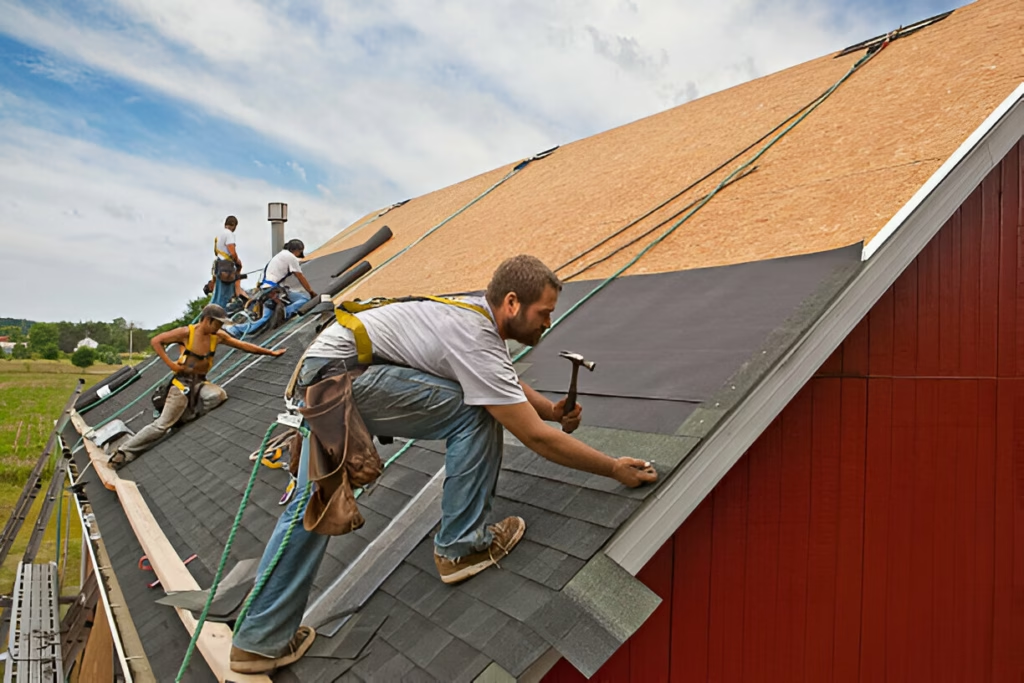
Shingles are installed from the bottom upward, overlapping each row. Proper alignment ensures water flows off the roof without penetrating beneath the shingles.
Nails must be placed in the correct location and depth. Incorrect nailing is one of the most common causes of roof failure.
Step 5: Install Flashing
Flashing is installed around chimneys, vents, and roof edges to prevent water penetration. This step requires precision and experience.
Step 6: Add Ridge Caps
Ridge cap shingles are installed along the roof peak to seal and protect the highest point of the roof. Proper ventilation is also addressed during this step.
Common Mistakes to Avoid When Installing Roof Shingles
Even small mistakes can cause major roofing problems.
Common errors include:
- Incorrect nail placement
- Poor ventilation
- Skipping underlayment
- Improper flashing installation
- Uneven shingle alignment
These mistakes reduce roof lifespan and may void warranties. This is why professional installation is often the safest option.
Safety Considerations During Roof Installation
Roof work can be dangerous without proper safety precautions. Falls, injuries, and equipment misuse are common risks.
Professional contractors follow strict safety protocols, including:
- Harness systems
- Proper ladder placement
- Weather condition monitoring
- Trained crews
For multi-story buildings or steep roofs, professional installation is strongly recommended.
DIY vs Professional Roof Shingle Installation
Many homeowners research how to install roof shingles hoping to save money. While small repairs may be manageable, full roof installation requires expertise.
DIY Installation
DIY may work for minor repairs, but mistakes can lead to expensive damage later. Improper installation often results in leaks and premature roof failure.
Professional Installation
Professional roofers ensure correct installation, code compliance, and warranty protection. Experienced contractors understand local climate challenges, including demanding environments like NYC, where roofs face heavy weather conditions.
How Professional Roofing Services Add Value
Hiring professionals means:
- Accurate installation
- High-quality materials
- Long-term durability
- Reduced maintenance costs
- Peace of mind
At HTCR Corp, roofing services are handled by trained experts who focus on precision, safety, and long-lasting performance. Every project is completed with attention to detail and industry best practices.
Maintenance Tips After Roof Shingle Installation
After installation, regular maintenance helps extend roof life.
Recommended maintenance includes:
- Annual roof inspections
- Clearing debris and gutters
- Checking flashing and vents
- Repairing damaged shingles early
Proactive care prevents costly repairs and keeps the roof performing at its best.
Signs Your Roof Needs Professional Attention
Even a well-installed roof can develop issues over time.
Warning signs include:
- Missing or cracked shingles
- Water stains on ceilings
- Increased energy bills
- Sagging roof sections
- Mold or mildew growth
If these signs appear, professional inspection is essential.
Why Choose a Trusted Construction Company
Roof installation is not just about shingles—it’s about protecting your investment. A professional construction company understands structural integrity, drainage, ventilation, and local building codes.
HTCR Corp provides complete roofing solutions with a focus on quality, safety, and customer satisfaction. Their experience ensures roofs are installed correctly the first time, avoiding future problems.
Final Thoughts
Learning how to install roof shingles properly helps property owners understand the importance of correct roofing methods. While the process may look simple, professional installation ensures durability, safety, and long-term performance.
Whether you’re building new or replacing an old roof, expert roofing services deliver better results, protect your property, and add lasting value. For reliable construction and roofing solutions, trust professionals who understand every detail of roof shingle installation.
For more information, visit https://htcrcorp.com/ and explore expert construction and roofing services designed to last.