Imagine pulling into your driveway after work and noticing that one section has sunk just enough to collect rainwater every time it storms. Or perhaps your front sidewalk has become uneven, creating a trip hazard for your family and visitors. These problems may seem minor at first, but they are often early signs that the concrete beneath your property is settling.
Many homeowners assume the only solution is to tear out and replace the damaged concrete. In reality, that is not always necessary. Concrete leveling can often restore uneven sidewalks, driveways, patios, and garage floors without the cost and disruption of a full replacement. Choosing the right repair method early can save thousands of dollars while extending the life of your existing concrete.
This guide explains everything you need to know about Concrete Leveling, including how it works, what causes concrete to sink, available repair methods, average costs, and how to determine whether leveling or replacement is the better investment for your property.
What Is Concrete Leveling?
Concrete Leveling is a repair process that raises sunken or uneven concrete slabs back to their original position instead of replacing them. Contractors inject specialized materials beneath the slab to fill empty spaces created by soil movement, lifting the concrete evenly until it is level again.
This process is commonly used for:
- Driveways
- Sidewalks
- Patios
- Garage floors
- Pool decks
- Walkways
- Basement slabs
- Concrete steps
Unlike complete concrete replacement, leveling preserves the existing slab, making it faster, more affordable, and less disruptive for homeowners.
Contractor Insight
One of the biggest misconceptions homeowners have is believing that cracked or uneven concrete always needs replacement. In many cases, the slab itself is still structurally sound. The real problem lies underneath, where soil has shifted or washed away over time. Restoring the support beneath the slab is often enough to solve the issue permanently.
How Do You Know If Your Concrete Needs Leveling?
Concrete rarely sinks overnight. Most slabs settle gradually, making it easy to ignore the warning signs until they become serious safety hazards.
If you notice any of the following problems, your property may benefit from Concrete Leveling.
Uneven Sidewalks
Raised or sunken sidewalk sections create trip hazards and may violate local safety regulations. Small height differences often become larger as the supporting soil continues to settle.
Sunken Driveways
Driveways frequently settle near garage entrances or along one edge where vehicles place repeated weight on the slab. Water pooling in these low areas accelerates deterioration.
Standing Water
If rainwater consistently collects on your patio or driveway instead of draining away, the slab has likely settled and no longer has the proper slope
Gaps Between Concrete and Your Home
As concrete moves downward, gaps often appear where patios, sidewalks, or garage floors meet your home’s foundation.
These openings allow water to reach the soil beneath the slab, increasing future settlement.
Cracks That Continue to Grow
Not every crack requires leveling, but widening cracks combined with uneven surfaces usually indicate movement beneath the slab rather than surface wear alone.
What Causes Concrete to Sink?
Understanding why concrete settles helps homeowners prevent future problems after repairs are completed.
Several factors contribute to concrete settlement, and in many cases, more than one cause is involved.
Soil Erosion
Water is the most common reason concrete sinks. Heavy rainfall, poor drainage, leaking pipes, or clogged gutters can wash away the soil beneath a slab. As the supporting soil disappears, empty spaces develop underneath the concrete, causing it to settle under its own weight.
Poor Soil Compaction
If the ground wasn’t properly compacted during the original construction, the soil naturally compresses over time. This gradual movement leaves the slab without consistent support, causing sections to sink unevenly.
Freeze-Thaw Cycles
In regions that experience cold winters, water enters small cracks in the concrete and freezes. As water expands during freezing, it increases pressure inside the slab and surrounding soil. Repeated freeze-thaw cycles accelerate settlement and cracking.
Heavy Loads
Driveways regularly support thousands of pounds from parked vehicles. Over many years, repeated weight gradually compresses the supporting soil, especially if the base was not properly prepared. Commercial loading areas experience this problem even faster due to heavier equipment and delivery trucks.
Tree Roots
While tree roots can lift concrete, they can also contribute to settlement. As roots grow or decay beneath sidewalks and patios, they change the stability of the surrounding soil, leading to uneven movement.
Poor Drainage
Improper grading around a home allows water to collect beneath patios, sidewalks, and driveways. Over time, saturated soil loses its strength and can no longer support the weight of the concrete slab. Improving drainage after Concrete Leveling is often essential for preventing future settlement.
What Are the Different Concrete Leveling Methods?
Not every Concrete Leveling project requires the same repair technique. Professional contractors choose the most effective method based on the condition of the slab, the amount of settlement, soil stability, and how the concrete surface is used. Whether you’re repairing a sunken driveway, uneven sidewalk, or settled concrete patio, selecting the right method ensures long-lasting results and helps prevent future movement.
Polyurethane Foam Injection
Polyurethane foam injection, also known as foam concrete leveling, is one of the most advanced and widely used concrete leveling services available today. During this process, contractors drill small holes into the concrete slab and inject expanding polyurethane foam beneath the surface. As the foam expands, it fills underground voids, stabilizes the soil, and gently raises the concrete back to its original position.
This method is ideal for homeowners looking for a fast, durable, and minimally invasive concrete lifting solution.
Advantages
- Fast installation with minimal downtime
- Lightweight material that won’t overload weak soil
- Water-resistant and moisture stable
- Quick curing time
- Long-lasting performance
- Minimal damage to existing concrete
Best For
- Residential driveways
- Sidewalks
- Patios
- Garage floors
- Pool decks
- Walkways
Mudjacking (Slab Jacking)
Mudjacking, also known as slab jacking, is a traditional concrete slab leveling method that has been used for decades. Instead of polyurethane foam, a cement-based slurry is pumped beneath the settled concrete to fill empty spaces and lift the slab back into place.
Although newer technologies are available, mudjacking remains an effective option for many residential and commercial concrete raising projects.
Advantages
- Cost-effective repair solution
- Suitable for larger concrete slabs
- Proven repair method with decades of use
- Provides durable structural support
Considerations
Because the cement slurry is heavier than polyurethane foam, it may not be the best choice for properties with weak or unstable soil. A professional inspection can determine whether slab lifting with mudjacking or foam injection is the better solution.
Stone Slurry Grouting
Stone slurry grouting is commonly used for large commercial, industrial, and municipal projects where heavy concrete slabs require additional structural support. This concrete leveling method uses a dense grout mixture to stabilize the ground beneath the slab and restore proper elevation.
It is typically recommended for roads, warehouses, airport pavements, and other heavy-load applications rather than standard residential properties.
Best For
- Commercial buildings
- Industrial facilities
- Heavy-duty concrete slabs
- Municipal infrastructure
Self-Leveling Compounds
Self-leveling compounds are designed to create a smooth, even surface on interior concrete floors before installing flooring materials such as tile, laminate, vinyl, or hardwood. Unlike concrete leveling methods that lift settled slabs, these products only level the surface and do not correct structural settlement.
They are best suited for minor indoor floor imperfections and should not be used to repair sunken concrete, uneven driveways, or settled concrete slabs caused by soil movement.
Best For
- Interior concrete floors
- Basement floors
- Garage interiors
- Preparing surfaces for new flooring
Contractor Insight
Every Concrete Leveling method has its advantages, but the best solution depends on why the concrete settled in the first place. During inspections, experienced contractors evaluate soil conditions, drainage, slab thickness, and the amount of settlement before recommending a repair method. Choosing the right technique not only restores a level surface but also helps prevent recurring settlement, saving homeowners time and money in the long run.
How Much Does Concrete Leveling Cost?
One of the biggest reasons homeowners choose Concrete Leveling is its affordability compared to complete slab replacement.
While every project is different, leveling typically costs significantly less because the existing concrete is preserved instead of demolished and poured again.
| Project | Average Cost |
|---|---|
| Sidewalk leveling | $300–$800 |
| Driveway leveling | $600–$2,000 |
| Patio leveling | $500–$1,500 |
| Garage floor leveling | $800–$2,500 |
| Pool deck leveling | $500–$1,800 |
| Basement slab leveling | $700–$2,000 |
Several factors influence the final cost, including the size of the slab, the amount of settlement, accessibility, repair method, and the condition of the soil beneath the concrete.
Contractor Insight
The lowest estimate isn’t always the best value. Professional contractors inspect drainage, soil stability, and the cause of settlement before recommending repairs. Correcting only the visible problem without addressing the underlying cause often leads to recurring settlement and additional repair costs in the future.
Concrete Leveling vs. Concrete Replacement
One of the biggest questions homeowners ask is whether they should level their existing concrete or replace it completely. The answer depends on the condition of the slab, the extent of the damage, and the underlying cause of the settlement.
If the concrete is structurally sound and the problem is caused by soil movement, Concrete Leveling is usually the most cost-effective solution. However, if the slab is severely cracked, crumbling, or beyond repair, replacement may be the better long-term investment.
| Concrete Leveling | Concrete Replacement |
|---|---|
| Lower upfront cost | Higher initial investment |
| Completed in a few hours | May take several days |
| Preserves existing slab | Removes and replaces concrete |
| Minimal disruption | Extensive demolition required |
| Cost-effective for minor to moderate settlement | Best for severely damaged slabs |
When Concrete Leveling Is the Better Choice
Concrete leveling is ideal when:
- The slab has settled but remains structurally sound.
- Cracks are minor and repairable.
- You want to restore the surface without demolition.
- Drainage or soil issues can be corrected.
- You want to save money while extending the life of your concrete.
When Replacement Is Necessary
Replacement may be recommended if:
- The slab is broken into multiple sections.
- Reinforcement bars are badly corroded.
- Large portions of the concrete are crumbling.
- Previous repairs have repeatedly failed.
- Structural integrity has been compromised.
Contractor Insight
Many homeowners assume visible cracks automatically mean replacement is necessary. In reality, experienced contractors evaluate the condition beneath the slab before making a recommendation. We’ve seen driveways with several cracks successfully restored through Concrete Leveling, while newer slabs sometimes require replacement because the underlying base has completely failed.
Which Concrete Leveling Method Is Best?
There is no single repair method that works for every project. The best solution depends on the size of the slab, the amount of settlement, soil conditions, and how the area is used.
For most residential projects, polyurethane foam injection offers excellent long-term performance because it is lightweight, cures quickly, and resists moisture. Mudjacking remains a reliable option for many larger slabs, while stone slurry grouting is often reserved for commercial applications.
A professional inspection ensures the repair method matches the cause of the settlement rather than simply treating the visible symptoms.
How Long Does Concrete Leveling Last?
One of the biggest advantages of Concrete Leveling is its long service life when performed correctly.
The lifespan depends on the repair method, soil stability, drainage conditions, and ongoing maintenance.
| Repair Method | Expected Lifespan |
|---|---|
| Polyurethane Foam | 20+ years |
| Mudjacking | 8–15 years |
| Stone Slurry Grouting | 20+ years |
| Self-Leveling Compound | 10–20 years (Indoor Use) |
Proper drainage plays a major role in extending the life of any repair. If water continues washing away the supporting soil, even a well-executed repair may eventually require additional work.
Is Concrete Leveling Worth It?
For many homeowners, the answer is yes.
Compared to replacing an entire slab, Concrete Leveling is typically faster, less disruptive, and significantly more affordable. It restores the appearance and functionality of existing concrete while eliminating many common safety hazards.
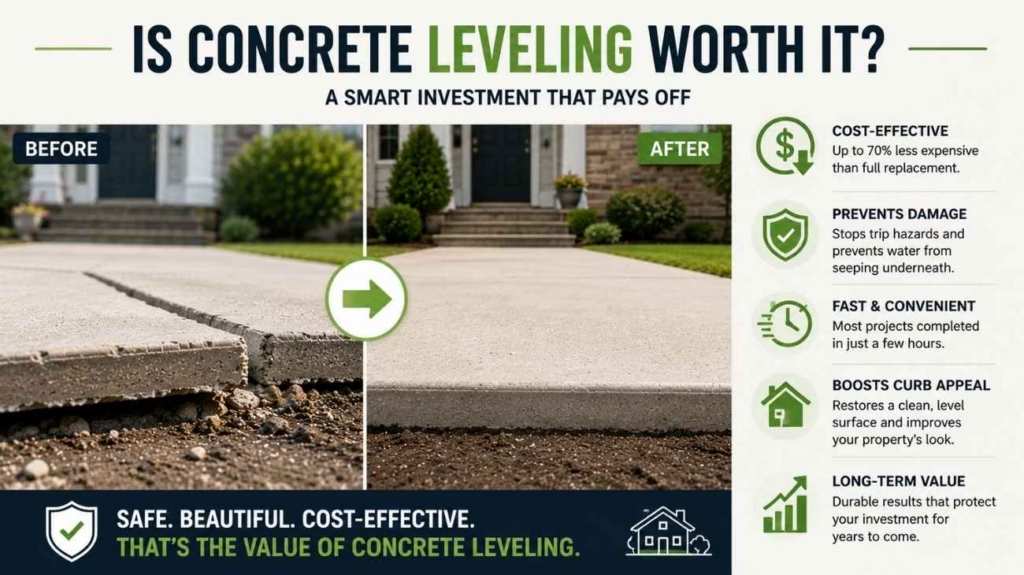
Additional benefits include:
- Improved curb appeal
- Safer walking surfaces
- Better water drainage
- Extended lifespan of existing concrete
- Lower repair costs than replacement
- Increased property value
Addressing settlement early also helps prevent further movement that could affect nearby structures or create more expensive repair needs in the future.
Can You Level Concrete Yourself?
Many DIY products claim to fix uneven concrete, but most are designed for cosmetic surface improvements rather than correcting the underlying problem.
Small indoor floor imperfections may be suitable for self-leveling compounds, but outdoor slabs usually require professional equipment and specialized materials.
DIY May Work For
- Minor indoor floor leveling
- Filling shallow surface imperfections
- Small cosmetic repairs
Professional Concrete Leveling Is Recommended For
- Sunken driveways
- Uneven sidewalks
- Garage floors
- Patios
- Pool decks
- Concrete steps
- Large settlement problems
Attempting to repair significant settlement without addressing the underlying soil conditions often results in temporary fixes rather than lasting solutions.
How Can You Prevent Concrete from Sinking Again?
While no repair can completely eliminate future movement, proper maintenance greatly reduces the risk of additional settlement.
Prevention Tips
- Keep gutters and downspouts clear.
- Direct water away from concrete surfaces.
- Repair plumbing leaks promptly.
- Improve yard drainage where water collects.
- Seal cracks before moisture penetrates.
- Avoid allowing heavy vehicles to remain parked in the same location for long periods.
- Schedule periodic inspections if settlement has occurred previously.
One of the most overlooked maintenance steps is controlling water around your home. Poor drainage remains one of the leading causes of concrete settlement.
Frequently Asked Questions
How much does Concrete Leveling cost?
Most residential Concrete Leveling projects cost between $300 and $2,500, depending on the size of the slab, repair method, and amount of settlement.
Is Concrete Leveling better than replacing concrete?
If the slab is structurally sound, leveling is usually faster and more affordable than replacement.
How long does Concrete Leveling take?
Most residential projects can be completed within a few hours, allowing homeowners to use the repaired area much sooner than replacement.
Is polyurethane foam better than mudjacking?
Both methods are effective. Polyurethane foam is lighter and cures more quickly, while mudjacking remains a reliable solution for many larger slabs.
Can cracked concrete be leveled?
Yes. Minor cracks can often be repaired during the leveling process if the slab remains structurally sound.
Will Concrete Leveling fix drainage problems?
Leveling improves drainage by restoring the proper slope, but additional drainage improvements may be needed if water continues to collect around the property.
Is Concrete Leveling permanent?
No repair lasts forever, but professionally completed leveling combined with proper drainage can provide decades of reliable performance.
Can sidewalks be leveled instead of replaced?
Yes. Many uneven sidewalks can be safely restored through Concrete Leveling, reducing both cost and disruption.
Does homeowners insurance cover Concrete Leveling?
Coverage depends on the cause of the settlement. Damage resulting from sudden events may be covered, while gradual soil movement usually is not.
When should I call a professional?
If you notice uneven concrete, widening cracks, standing water, or trip hazards, scheduling an inspection early can help prevent more expensive repairs later.
Conclusion
Uneven concrete isn’t just a cosmetic issue—it can create safety hazards, drainage problems, and costly structural concerns if left untreated. Fortunately, Concrete Leveling offers a practical and cost-effective way to restore sunken driveways, sidewalks, patios, garage floors, and other concrete surfaces without the expense of complete replacement.
If you’ve noticed settling concrete around your property, addressing the problem early can save both time and money. A professional inspection can determine the cause of the settlement, recommend the most appropriate repair method, and help ensure your concrete remains safe, stable, and durable for years to come.
Contact US
Website: www.htcrcorp.com/
Phone: 718-510-6000
Serving: Manhattan, Brooklyn, Queens, The Bronx, Westchester County, and Long Island.
Address: 201 Bay 43rd St 2nd FL Brooklyn, NY 11214