Torch down roofing is one of the most durable and waterproof roofing systems used for flat and low-slope roofs. Commonly installed on residential, commercial, and industrial buildings, this roofing method uses heat to fuse layers of modified bitumen membrane onto the roof surface, creating a strong and weather-resistant barrier.
Because of its exceptional waterproofing performance and long lifespan, torch down roofing has become a popular solution for property owners looking for reliable flat roof protection.
If you have ever wondered what is torch down roofing or whether a torch down roof is right for your property, this guide covers everything you need to know — including costs, installation, benefits, maintenance, and common problems.
What Is a Torch Down Roof?
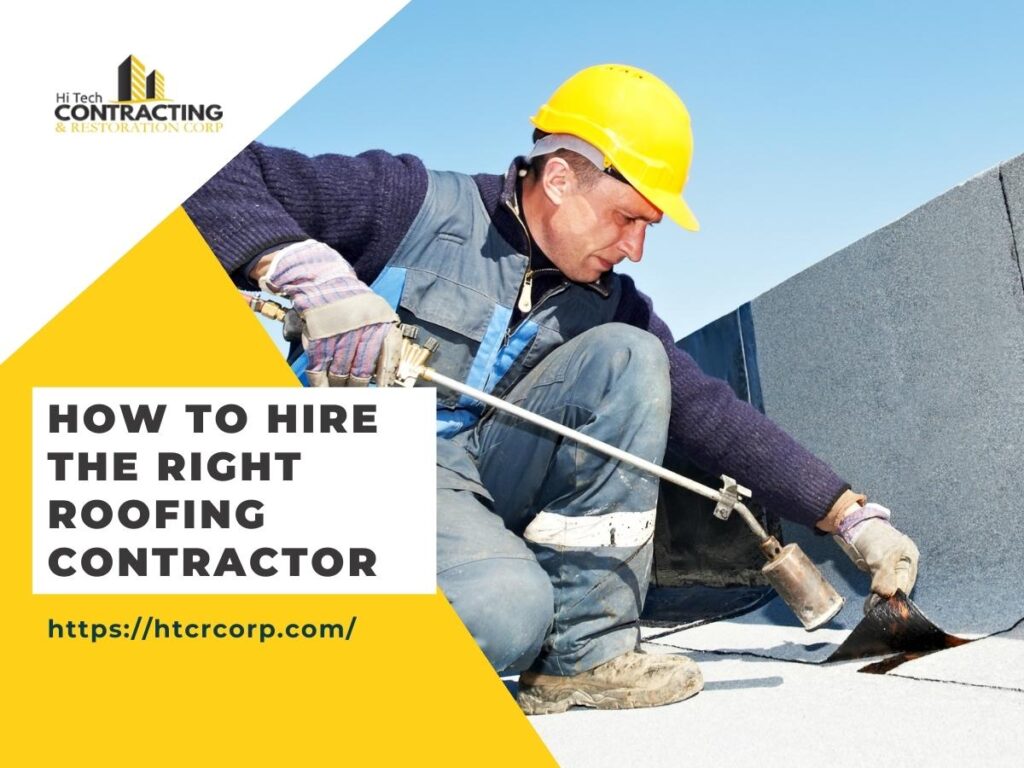
A torch down roof is a roofing system made from modified bitumen membranes that are heat-applied using a propane torch. During installation, the roofer heats the underside of the roofing membrane until it melts and bonds securely to the roof surface.
The result is a seamless, waterproof roofing layer designed specifically for flat and low-slope roofs.
Torch down roofing is commonly used because it offers:
- Excellent waterproofing
- UV resistance
- Long-term durability
- Strong weather protection
- Low maintenance requirements
Unlike traditional roofing shingles, torch down systems create a continuous membrane that reduces the risk of leaks and standing water damage.
How Torch Down Roofing Works
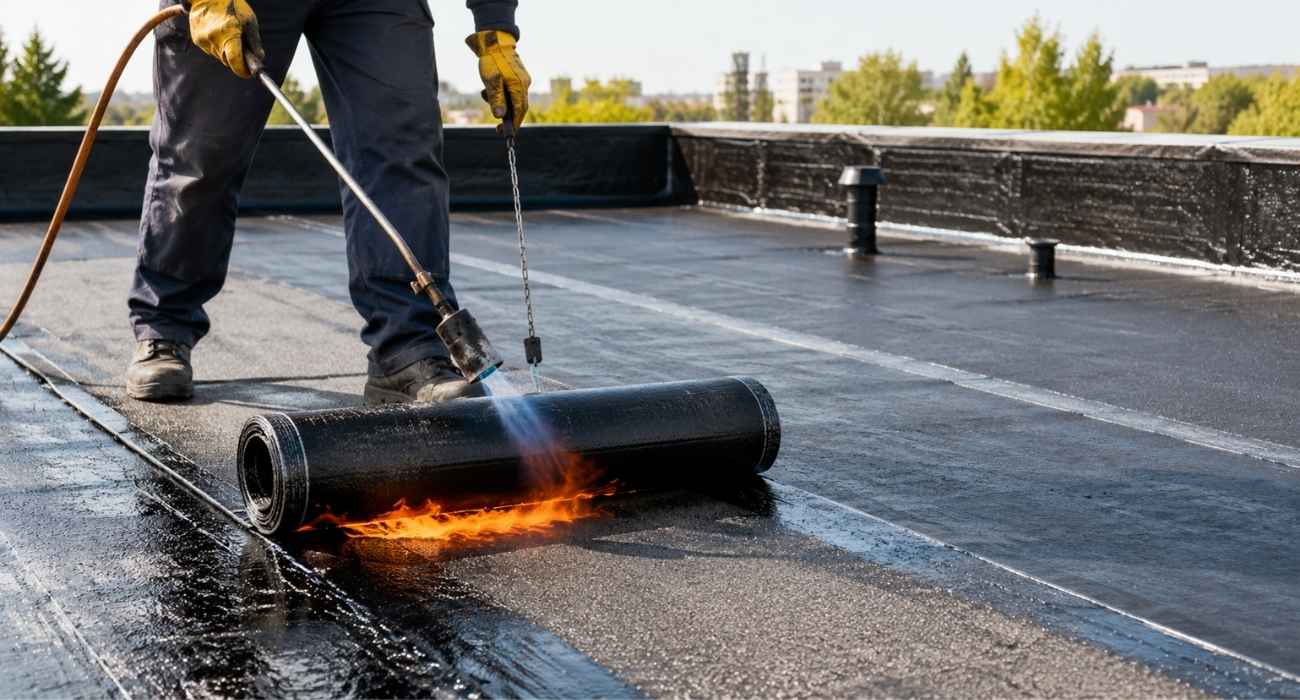
The down roofing torch installation method relies on heat-fused membranes that adhere tightly to the roof deck. The system usually consists of multiple layers that work together to create a waterproof barrier.
Main Components of Torch Down Roofing
1. Base Sheet
The base layer is attached to the roof deck to provide a stable foundation.
2. Modified Bitumen Membrane
This flexible membrane contains asphalt mixed with rubber or plastic modifiers for enhanced durability.
3. Reinforcement Layer
Fiberglass or polyester reinforcement improves strength and flexibility.
4. Mineral Surface Coating
The top layer protects against UV rays, weather exposure, and foot traffic.
Once heated and sealed, the membrane forms a watertight surface capable of handling harsh environmental conditions.
Benefits of Torch Down Roofing
Torch down roofing continues to grow in popularity because it offers several major advantages compared to other flat roofing systems.
1. Exceptional Waterproof Protection
One of the biggest benefits of torch down roofing is its superior waterproofing ability.
Flat roofs are highly vulnerable to standing water and leaks. Because torch down roofing creates a seamless membrane, it minimizes water penetration and protects the structure underneath.
This makes it one of the best choices for areas with heavy rainfall or snow.
2. Long Lifespan
A properly installed torch down roof can last between 15 and 25 years with regular maintenance.
Factors affecting lifespan include:
- Installation quality
- Climate conditions
- Roof maintenance
- Material quality
- Drainage efficiency
Premium modified bitumen systems can sometimes last even longer.
3. UV and Weather Resistance
Torch down roofing performs well under extreme weather conditions.
It offers protection against:
- UV rays
- Heavy rain
- Wind exposure
- Temperature fluctuations
- Snow and ice
Its flexibility allows the material to expand and contract without cracking.
4. Low Maintenance Requirements
Compared to many roofing systems, torch down roofing requires minimal maintenance.
Routine inspections and debris removal are usually enough to maintain performance and extend roof life.
5. Energy Efficiency
Some torch down roofing systems include reflective coatings that reduce heat absorption.
This can help:
- Lower cooling costs
- Improve indoor comfort
- Increase energy efficiency
Reflective roofing systems are especially useful in warmer climates.
6. Strong Durability
Torch down roofs resist:
- Tears
- Punctures
- Impact damage
- Moisture intrusion
This makes them ideal for commercial buildings with rooftop equipment or foot traffic.
Torch Down Roofing Cost
One of the most common questions homeowners ask is about torch down roofing cost.
The total cost depends on several factors, including roof size, labor, materials, and location.
Average Torch Down Roofing Cost
On average, torch down roofing costs range from:
| Roofing Type | Average Cost Per Sq. Ft. |
| Basic Torch Down Roof | $4 – $7 |
| Premium Modified Bitumen | $7 – $10 |
| Commercial Installation | $8 – $12 |
For a typical flat roof, total installation costs may range between:
- $4,000 to $15,000+
depending on complexity and roof size.
Factors Affecting Torch Down Roofing Cost
Torch down roofing cost is mainly influenced by a few key factors that directly impact materials, labor, and installation complexity.
Roof Size
Roof size is the biggest cost factor. Larger roofs need more materials and longer labor hours, which significantly increases the total price.
Roof Condition
The condition of the existing roof matters a lot. Damaged, leaking, or weakened surfaces require repairs or replacement work before installation, raising costs.
Material Quality
Higher-grade modified bitumen materials cost more but provide better durability, waterproofing, and a longer service life compared to basic options.
Labor and Location
Labor costs vary by region and contractor expertise. Urban areas with higher demand typically have higher installation charges.
Installation Complexity
Complex roof designs, poor drainage, or difficult access increase labor time and require extra effort, which increases overall cost.
Torch Down Roofing Installation Process
Professional installation is critical for the performance and safety of a torch down roof.
Step 1: Roof Inspection
Roofers inspect the structure for:
- Damage
- Moisture issues
- Weak spots
- Drainage problems
Necessary repairs are completed before installation.
Step 2: Surface Preparation
The roof deck is cleaned and prepared to ensure proper adhesion.
Old roofing materials may be removed if necessary.
Step 3: Base Sheet Installation
The base sheet is secured to the roof surface.
This provides stability for the modified bitumen membrane.
Step 4: Heating the Membrane
Using a propane torch, roofers heat the underside of the membrane until it melts.
The membrane is then rolled onto the roof surface.
Step 5: Seam Sealing
Special attention is given to seams and edges to create a waterproof seal.
Proper seam bonding is essential for leak prevention.
Step 6: Final Inspection
The contractor inspects the completed roof to ensure proper adhesion and waterproofing.
Torch Down Roofing vs Other Flat Roofing Systems
Choosing the right roofing material depends on your budget, climate, and building needs.
Torch Down Roofing vs TPO
| Feature | Torch Down Roofing | TPO Roofing |
| Waterproofing | Excellent | Very Good |
| Lifespan | 15–25 Years | 15–20 Years |
| Heat Resistance | Good | Excellent |
| Installation | Heat Applied | Heat Welded |
| Cost | Moderate | Moderate |
Torch Down Roofing vs EPDM
| Feature | Torch Down Roof | EPDM Roof |
| Durability | High | Moderate |
| UV Resistance | Excellent | Good |
| Puncture Resistance | Strong | Moderate |
| Maintenance | Low | Moderate |
Torch Down Roofing vs Built-Up Roofing
Built-up roofing uses multiple asphalt layers and gravel, while torch down systems use modified bitumen membranes.
Torch down roofs are generally:
- Faster to install
- More flexible
- Easier to maintain
- More energy efficient
Common Torch Down Roofing Problems
- Cracking and Splitting
Torch Down Roofing may crack over time because of heat, UV exposure, and aging. These cracks can allow water to seep into the roof structure.
- Blistering and Bubbling
Moisture or trapped air beneath the membrane can create bubbles on the roof surface. Blisters weaken the roofing material and may lead to leaks.
- Ponding Water
Flat torch-down roofs can collect standing water after rainfall. Prolonged ponding can damage the membrane and shorten the roof’s lifespan.
- Seam Failure
The seams between roofing layers may separate due to poor installation or weather expansion. Open seams are a common source of water leaks.
- Granule Loss
Protective granules may wear away over time from sunlight and foot traffic. This reduces the roof’s resistance to UV damage.
- Flashing Damage
Flashing around vents, chimneys, and roof edges can crack or loosen. Damaged flashing often allows moisture to enter the building.
- Punctures and Tears
Sharp objects, debris, or maintenance work can puncture the roof membrane. Even small tears can result in serious water damage.
- Membrane Shrinkage
As the roof ages, the membrane may shrink and pull away from edges or penetrations. This creates openings where water can enter.
Torch Down Roof Maintenance Tips
Regular maintenance helps maximize roof lifespan and performance.
Schedule Annual Inspections
Professional inspections can identify small issues before they become expensive repairs.
Keep Drains Clear
Blocked drains cause water buildup and increase leak risks.
Remove Debris
Leaves, branches, and dirt should be removed regularly.
Repair Minor Damage Quickly
Small cracks or seam damage should be repaired immediately.
Avoid Excessive Foot Traffic
Unnecessary roof traffic can damage the membrane surface.
Is Torch Down Roofing Worth It?
For many property owners, torch down roofing is absolutely worth the investment.
It provides:
- Long-term waterproof protection
- Excellent durability
- Lower maintenance costs
- Strong weather resistance
- Reliable flat roof performance
It is especially ideal for:
- Commercial buildings
- Garages
- Apartment complexes
- Residential flat roofs
- Low-slope roof systems
While the initial installation cost may be higher than some alternatives, the long lifespan and reduced repair needs often provide excellent long-term value.
Frequently Asked Questions
What is torch down roofing?
Torch down roofing is a modified bitumen roofing system installed using heat to fuse waterproof membranes onto flat or low-slope roofs.
How long does torch down roofing last?
Most torch down roofs last between 15 and 25 years with proper maintenance.
Is torch down roofing waterproof?
Yes. Torch down roofing creates a seamless waterproof membrane designed to prevent leaks and moisture damage.
How much does torch down roofing cost?
Torch down roofing typically costs between $4 and $12 per square foot depending on materials, labor, and roof complexity.
Can torch down roofing be repaired?
Yes. Small cracks, seam issues, and leaks can usually be repaired without replacing the entire roof.
Final Thoughts
Torch down roofing remains one of the most trusted flat roofing systems available today. Its durability, waterproof performance, and long lifespan make it a smart investment for both residential and commercial properties.
Whether you are researching what is a torch down roof, comparing roofing systems, or evaluating torch down roofing cost, understanding the benefits and maintenance requirements can help you make the best decision for your property.
When installed by experienced professionals and properly maintained, a torch down roof can provide decades of reliable protection and energy-efficient performance.
Contact US
Website: www.htcrcorp.com/
Phone: 718-510-6000
Serving: Manhattan, Brooklyn, Queens, The Bronx, Westchester County, and Long Island.
Address: 201 Bay 43rd St 2nd FL Brooklyn, NY 11214